
Chagoi reference photograph
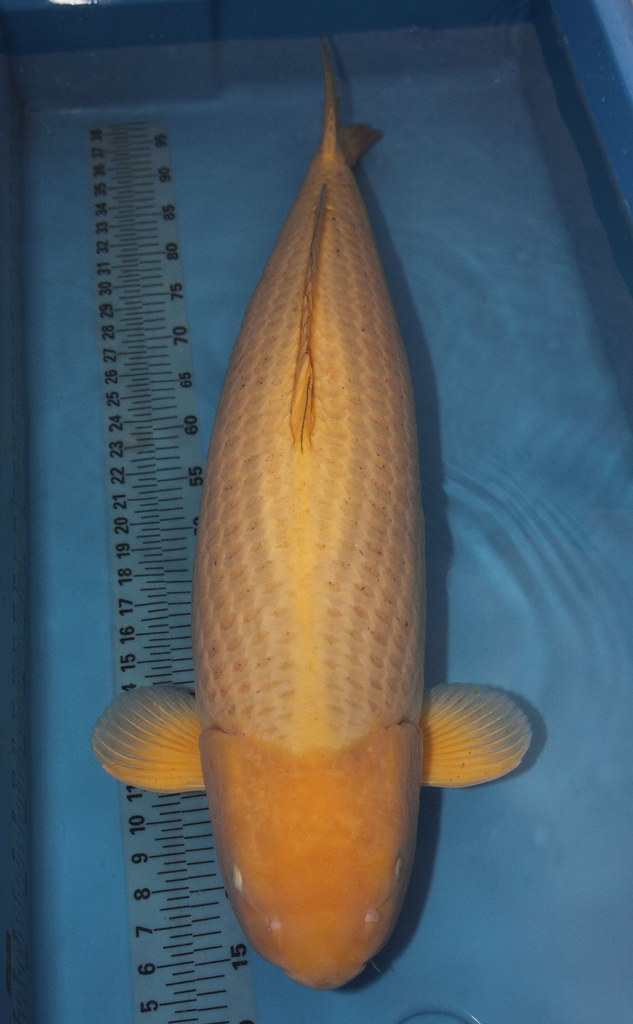
What makes a Chagoi?
The All Japan Nishikigoi Promotion Association describes Chagoi as brown all over, without distinct markings. Zen Nippon Airinkai lists Chagoi among its representative Mujimono, the single-color group. Check the rules of the particular show if you plan to enter a fish.
How to identify a Chagoi
- Look for distinct patches. Check the head, back and both flanks. A repeating outline around individual scales is different from a separate patch of color.
- Check the base color in even light. Look for tea-brown across the body. Reflections and a colored tub can shift how a fish looks in a photograph.
- Observe the scales. On a fully scaled fish, follow the rows toward the tail. Ginrin describes reflective scales and can occur over a Chagoi base.
Chagoi and similar-looking koi
| Variety or trait | What to look for |
|---|---|
| Soragoi | A pale blue-gray ground without distinct patches. |
| Karashigoi | A mustard-colored ground without distinct patches. |
| Ochiba Shigure | Earthen-brown patches on a pale blue-gray ground. Look for separate areas of color. |
| Ginrin Chagoi | Reflective scales over the tea-brown Chagoi base. |
What to look for when choosing a Chagoi
- Compare body shape and balance as the fish swims.
- Look at the color from head to tail and check both sides in similar light.
- Use appearance for identification. How readily a fish approaches people varies between individuals.