
Award-winning reference photos
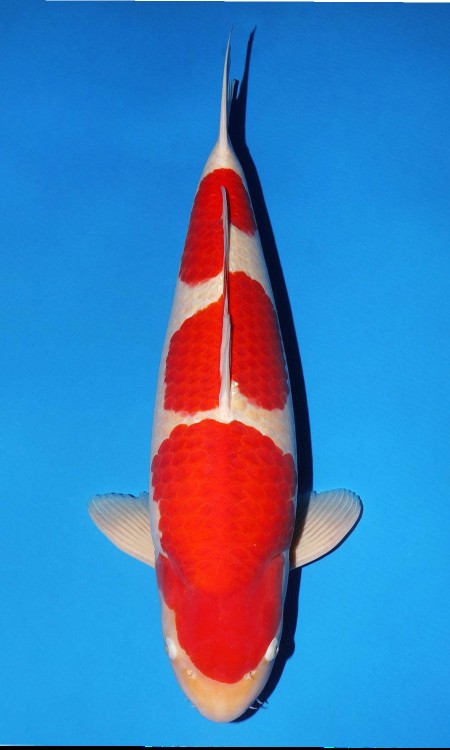
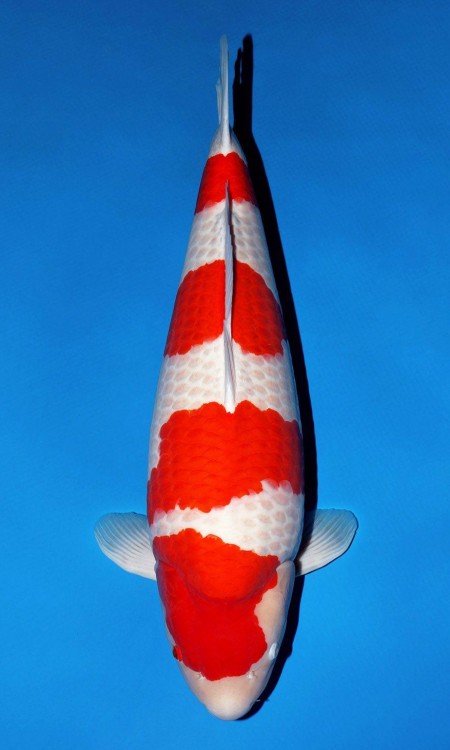
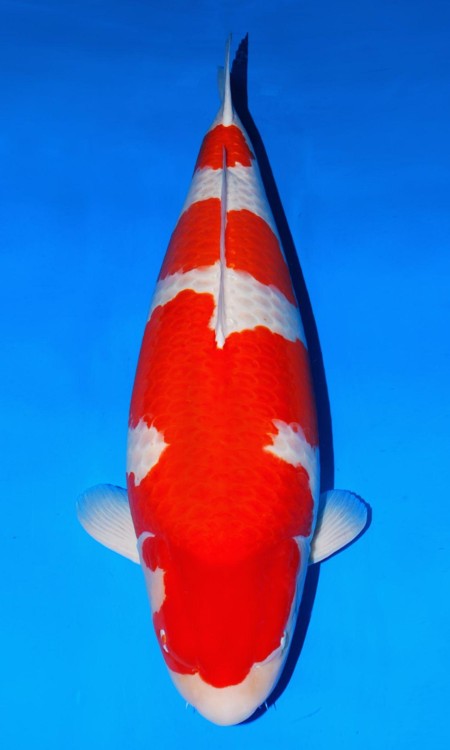
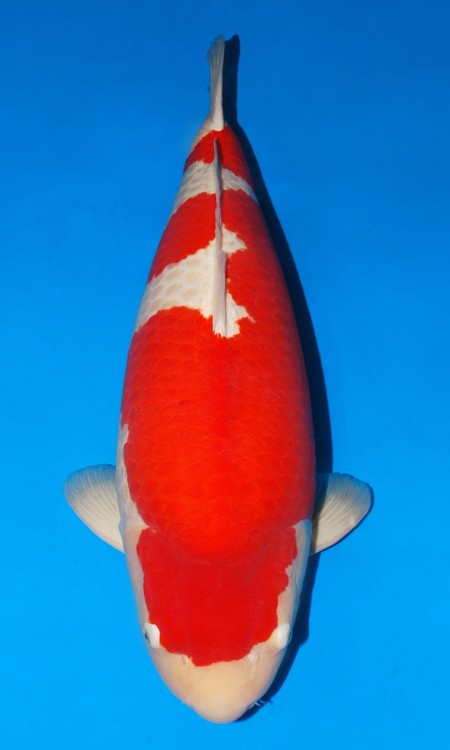
What makes a Kohaku
A Kohaku is a non-metallic white koi with red markings. The Japanese name literally points to red and white. Its simplicity is the challenge: without black sumi or metallic shine, every weakness in skin, body, and pattern is visible.
Core terms
- Shiroji
- The white ground. It should look clean, bright, and healthy rather than yellow or muddy.
- Hi / Beni
- The red marking. Beginners should look for confident color and pleasing placement rather than chasing perfect show terminology too early.
- Kiwa and sashi
- Edges of the red pattern. Crispness and development matter, but these are advanced judging details and can change as koi grow.
| Judging layer | Kohaku standard | Beginner mistake |
|---|---|---|
| Body | Straight, balanced frame with enough volume through the shoulders and a strong tail tube. | Buying a thin fish because the red pattern is attractive. |
| Shiroji | Bright white ground that makes the red stand out; avoid yellowing, grayness, or dirty head skin. | Ignoring poor white skin in young koi. |
| Beni | Even red with a pleasing distribution from head toward tail; tone should not look weak or patchy. | Overvaluing a dramatic head mark while the body pattern is unbalanced. |
| Pattern | Balanced from front to back with enough white space to keep the fish elegant. | Thinking more red always means better. |
What beginners should notice
- Look for bright, clean white skin without a yellow or muddy cast.
- Red markings should look confident and pleasing from head to tail.
- The body should feel balanced, not thin, bent, or pinched near the tail.
- Do not buy only for a dramatic head pattern; check the whole fish and the way it swims.
Common Kohaku pattern names
These names describe the placement or shape of the red pattern; they are useful descriptions, not separate base varieties.
- Nidan, Sandan, and Yondan
- Two-step, three-step, and four-step red patterns, with white breaks between the steps.
- Inazuma
- A lightning-shaped red pattern that runs along the body.
- Ippon-hi
- One continuous red pattern without a white break.
- Kuchi-beni
- A small red marking on the lips, often described as lipstick.
- Maruten
- An independent round red mark on the head plus additional red markings on the body.
Tancho or Maruten?
Check the whole body, not only the head. A Tancho Kohaku has one round or nearly round red head marking and no other red markings on the body. A Maruten Kohaku also has a separate head marking, but retains additional red pattern on the body.
Learn the broader group in the Tancho koi guide. Pattern terminology follows the Zen Nippon Airinkai Kohaku reference.
Why Kohaku matters
Japanese professional sources often treat Kohaku as a foundation variety. Learning Kohaku helps train your eye for quality across many other koi because it forces you to see skin, color, body, and pattern without distraction.
Buying note
For a home pond, choose a healthy, active koi you enjoy viewing from above. Show-grade standards are useful for learning, but they should not be confused with the basic goal of keeping a healthy fish in stable water.