
Award-winning reference photos
Identity
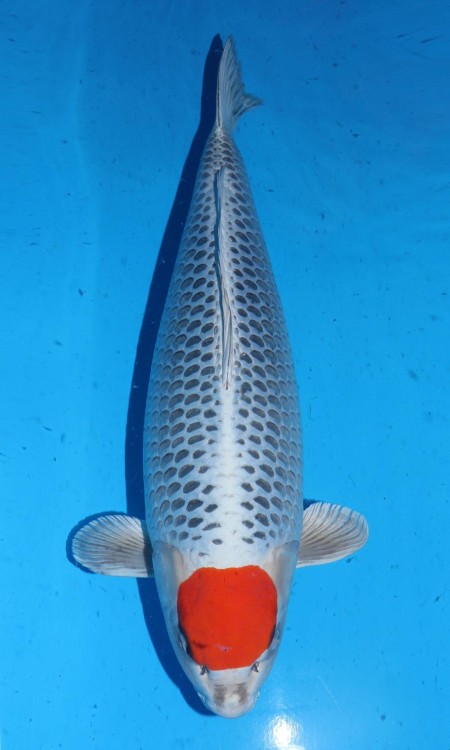
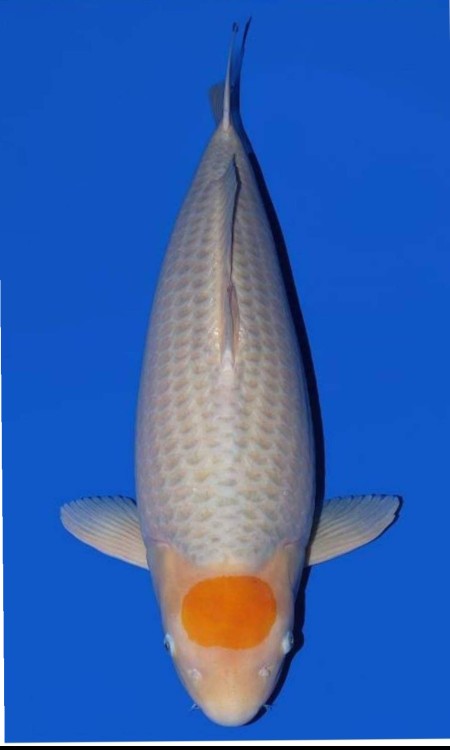
Tancho is a head-pattern category layered on an underlying variety. Common examples include Tancho Kohaku, Tancho Sanke, Tancho Showa, Tancho Goshiki, and Ginrin Tancho Showa.
For everyday recognition, the mark is usually a single round red marking on the head. The complete JAS definition is slightly broader: the circular head imprint can be a color other than scarlet. A koi with a round head mark plus additional body pattern is generally described as Maruten rather than Tancho.
| Feature | Preferred quality | Beginner caution |
|---|---|---|
| Head mark | Centered, pleasing, and separated from other red body markings. | A red spot alone does not make the fish valuable. |
| Shape of mark | Round or balanced shape is prized, but exact perfection is rare. | Do not ignore weak body or poor skin for a circle. |
| White skin | Clean white ground makes the Tancho mark stand out. | Yellowed skin weakens the simple design. |
| Underlying variety | Identify whether it is Tancho Kohaku, Tancho Sanke, or Tancho Showa. | Judging changes if sumi is present. |
Verified Tancho combinations
Tancho describes the head-pattern identity while the rest of the name preserves the base variety and any scale or metallic modifiers.
| Combination | What remains visible | Extra modifier |
|---|---|---|
| Tancho Sanke / Tancho Showa | The respective Taisho Sanke or Showa Sanshoku black-pattern structure, without additional red body markings. | None required. |
| Tancho Goshiki / Tancho Kujaku | Goshiki reticulation or Kujaku metallic-reticulated character below the isolated head mark. | Kujaku already includes whole-body metallic luster. |
| Doitsu Tancho Showa / Doitsu Tancho Kujaku | The Tancho combination on a nearly scaleless body. | Doitsu scale type. |
| Gin Rin Tancho Kohaku / Gin Rin Tancho Showa | The Tancho base identity plus orderly reflective scales. | Gin Rin scale reflection. |
| Tancho Ochiba / Tancho Budo Goromo | Ochiba Shigure or Budo Goromo characteristics remain visible; the head mark may not always be plain scarlet. | Check the official subtype description instead of relying on color alone. |
| Tancho Kin Showa / Tancho Sakura Ogon | The underlying metallic variety remains visible beneath the isolated head mark. | Whole-body Hikari luster. |
Tancho versus Maruten
A centered circular head mark does not automatically make a koi Tancho. If the body also carries the corresponding color pattern, Japanese references use Maruten or Komaruten instead. Always inspect the entire fish before naming the pattern.
What to look for
- The red head mark should be visually centered and pleasing.
- The body should still be strong; the head mark alone does not make a good koi.
- Clean white skin makes the Tancho impression much stronger.
Beginner note
Do not overpay only for a head spot. Check skin quality, swimming behavior, body line, the underlying variety, and whether the mark has clean edges. Names, combinations, and the Tancho/Maruten distinction follow the official JAS Tancho definition.