
Award-winning reference photos


How to recognize Showa
The JNPA definition describes a black ground with red and white markings and continuous utsuri-zumi. Visible black need not occupy most of the fish. Keep variety identification separate from preferences for a striking or balanced show pattern.
| Feature | What to look for | How to use it |
|---|---|---|
| Sumi | Connected black areas that may wrap up from below the lateral line. | Look at how the pattern continues around the body, not only the size of each spot. |
| Head markings | Head sumi and menware can contribute to the characteristic pattern. | Consider them with the whole fish; a head mark alone is not decisive. |
| Pectoral fins | Motoguro is concentrated black at the fin base. | Its visibility can change with development; it is not a mandatory standalone test. |
| Development | Sumi and the overall pattern may change as young fish mature. | Ask for age and earlier photographs; future appearance is not guaranteed. |
Showa and Sanke: compare several clues
| Clue | Showa | Sanke |
|---|---|---|
| Base colour | Black base with red and white markings. | White base with red and black markings. |
| Sumi pattern | Continuous utsuri-zumi, often wrapping upward. | Black commonly appears as more separate accents. |
| Head and fins | Head sumi and motoguro are useful clues. | Often a cleaner head and pectoral stripes; exceptions occur. |
Do not classify from head sumi, motoguro or a fixed colour percentage alone. Use the whole pattern and reliable history where the photograph is inconclusive.
A real Showa reference
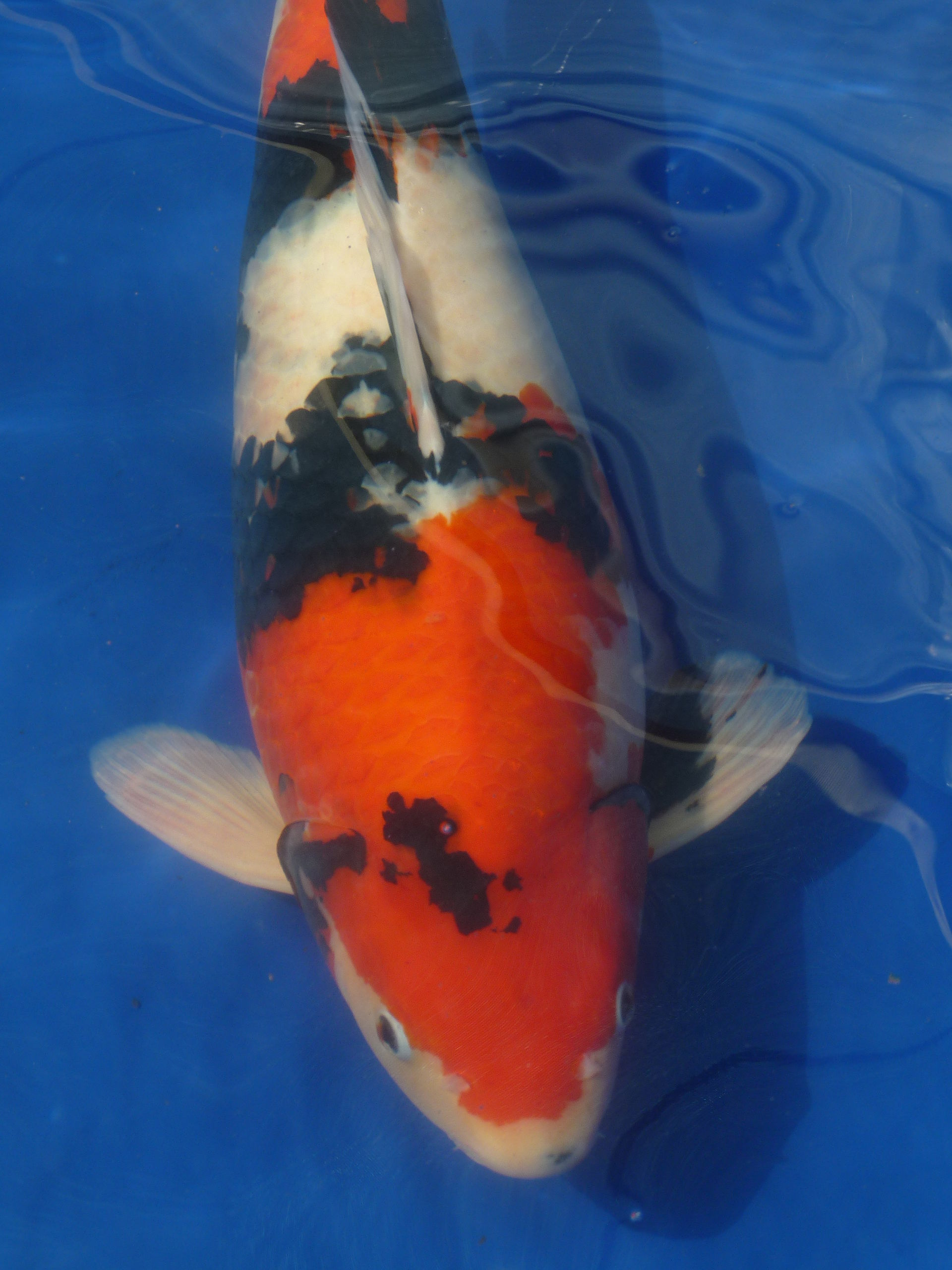
Terms worth knowing
- Motoguro (元黒)
- A concentrated black area at the base of a pectoral fin.
- Menware (面割れ)
- Head sumi that visually divides the face. Exact pattern labels vary between references; do not require one rigid shape.
- Utsuri-zumi (写り墨)
- Continuous black-base areas involved in the overall wrapping pattern.
Where Kindai Showa fits
Kindai Showa describes a modern Showa appearance with more visible white and less visible black. It remains within Showa, rather than a separate base variety in the cited definition. A white-dominant photograph does not by itself make a fish Sanke; judge the underlying pattern rather than inventing a white-percentage cutoff.
Choosing a young Showa
- Begin with body shape, skin and overall balance rather than one dramatic mark.
- Compare images taken at different ages; sumi development is not a promise of a particular result.
- Use clear views of the head, both pectoral fins and body together.