
A dedicated pond without plants
An open swimming area makes it easier to see the fish, inspect the bottom and remove waste. If the pond needs shade, consider a shade sail or a planted area outside the main pond. Keep access to the pond and equipment clear.
Planting baskets at the pond edge
Marginal plants grow near the edge. Emergent plants have stems and leaves above water. Set a stable, removable basket on a shelf that suits the plant’s recommended depth. Contain the planting medium and keep baskets clear of intakes and places you need to reach for cleaning.
Water lilies, free-floating plants and submerged plants
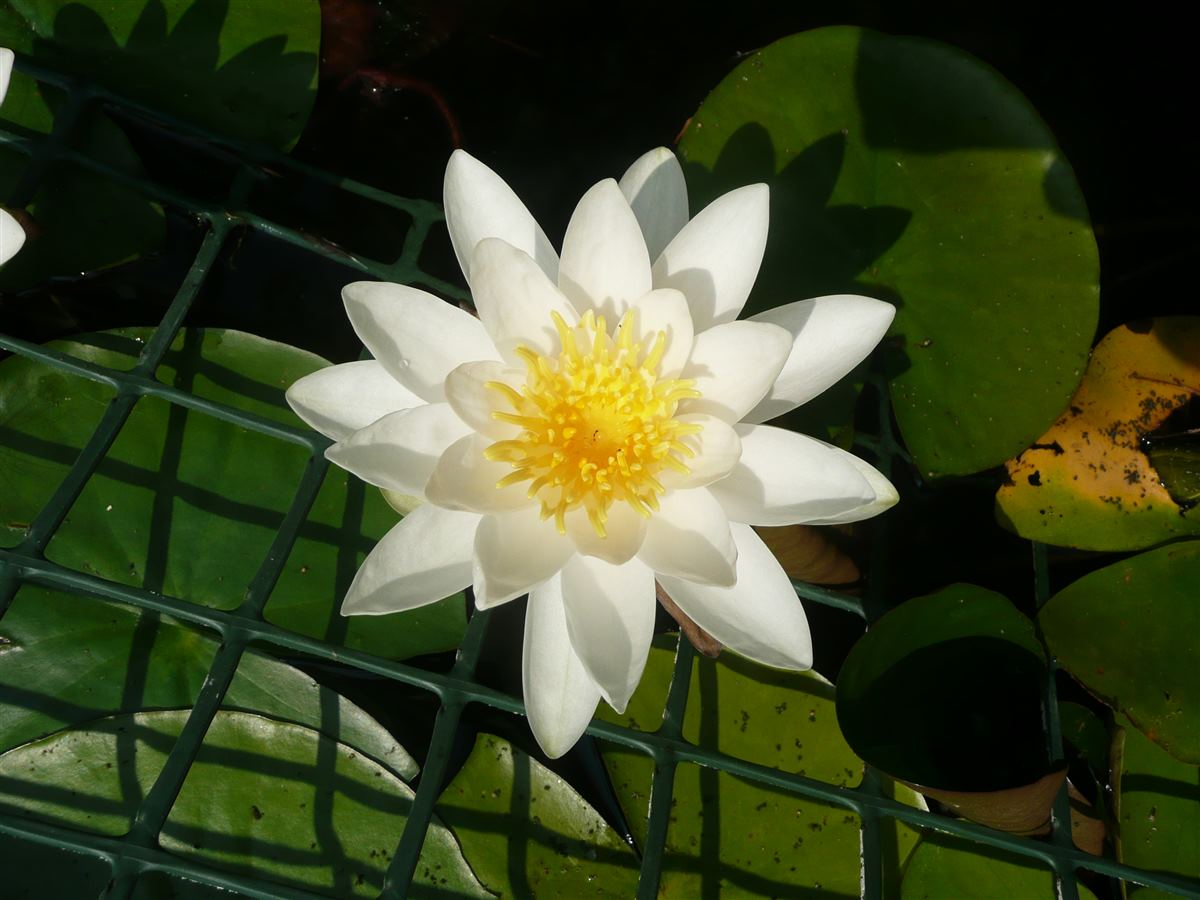
Water lilies root in the substrate and spread leaves across the surface. Free-floating plants do not anchor to the bottom. Submerged plants grow below the surface. Choose water lilies for the actual depth and available space. Keep a clear view of the fish and open water around the skimmer and returns. Plants do not replace aeration.
A separate planted filter
If you use a planted gravel bed as an additional stage, remove solids upstream and provide a way to access and clean the bed. Gravel can clog with trapped debris. Keep mechanical filtration and size the main system for the fish load.
| Layout | What it offers | What to check | Practical step |
|---|---|---|---|
| Open main pond | Clear view of fish and easy cleaning | Shade may be limited | Plan shade outside the swimming area |
| Baskets at the edge | Planting that can be moved | Koi may disturb the roots or tip baskets | Use a stable shelf and protect the roots |
| Water lilies or free-floating plants | Shade across part of the surface | Leaves can block the skimmer or the view | Thin growth and remove dead leaves |
| Separate planted bed | An additional treatment stage | Solids may clog the gravel | Remove solids upstream and leave cleaning access |
Before adding plants
Check the plant’s scientific name, mature size, planting depth and suitability for your climate. Check local rules on invasive species. Rinse and inspect new plants separately for attached animals and plant fragments. Keep nursery water, discarded plants and trimmings out of waterways and storm drains.
A simple starting point
Try one basket where koi cannot reach the roots. Watch for loose planting medium, trapped leaves and growth toward the skimmer. Adjust or move the basket while it is still easy to lift.
Seasonal maintenance
- Spring. Check baskets and split crowded plants when appropriate for the species.
- Summer. Thin overgrowth and keep the skimmer, returns and aeration working.
- Autumn. Remove fallen leaves and check the pond after storms.
- Winter. Remove dying foliage and follow the plant’s cold-weather needs.