
Reference photographs
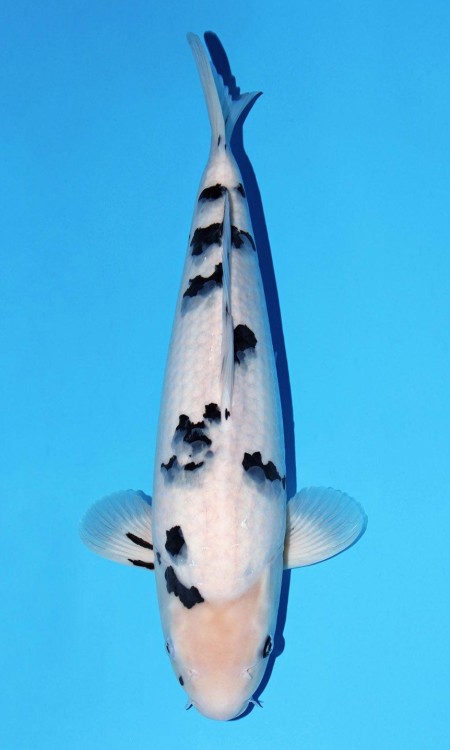
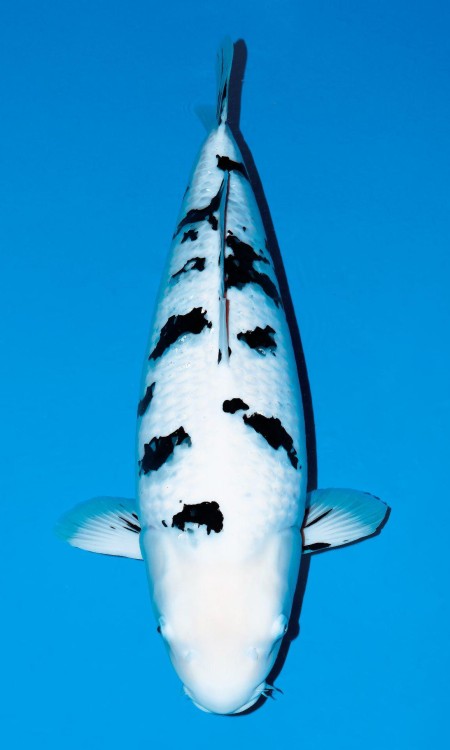
Three ground colors
- Shiro Bekko
- White ground with black markings.
- Aka Bekko
- Red ground with black markings.
- Ki Bekko
- Yellow ground with black markings.
How to distinguish Bekko
Look at the ground color and the structure of the whole pattern, rather than counting how much black is visible. Bekko carry separate, Sanke-like sumi patches; Utsuri have a different, more connected sumi pattern extending around the flanks.
A clean head is the usual Bekko ideal. ZNA allows small head spots that do not upset the overall sumi balance, so one tiny spot is not a sufficient reason to relabel a fish. A photograph alone may not settle an ambiguous identification.
| Comparison | Useful distinction | Limit of the clue |
|---|---|---|
| Bekko and Utsuri | Separate patches on a single white, red or yellow ground versus the connected sumi structure of Utsuri. | Neither the proportion of black nor a single head marking is a complete test. |
| Shiro Bekko and Sanke | Shiro Bekko combine white and black; Sanke also have a red pattern. | Check the whole fish, not a cropped patch of skin. |
| Aka Bekko and Aka Sanke | Aka Bekko have a red ground; Aka Sanke retain white on the body, often on the belly. | ZNA notes that a little white at the fin tips can occur in Aka Bekko. |
What to look for
Consider ground-color quality and the arrangement of sumi together. Judging preferences describe appearance; they are not a diagnosis of health or a guarantee of future development.
| Feature | Observation |
|---|---|
| Ground color | Look for an even base that shows the black pattern clearly. |
| Sumi | Look for distinct, balanced patches; fine scattered specks can distract from the main pattern. |
| Whole fish | Assess body shape and the overall balance before focusing on one attractive marking. |
For a closer comparison, read the guides to Utsurimono and Taisho Sanke. Doitsu describes reduced scalation; it does not replace the underlying Bekko color-pattern name.