
How to identify Tancho koi
In everyday koi usage, Tancho on its own often means Tancho Kohaku. The Japanese Agricultural Standard (JAS) also uses Tancho for the head marking across several varieties. That marking is usually round and red, although the standard allows other colors.
Compare two Tancho in photos
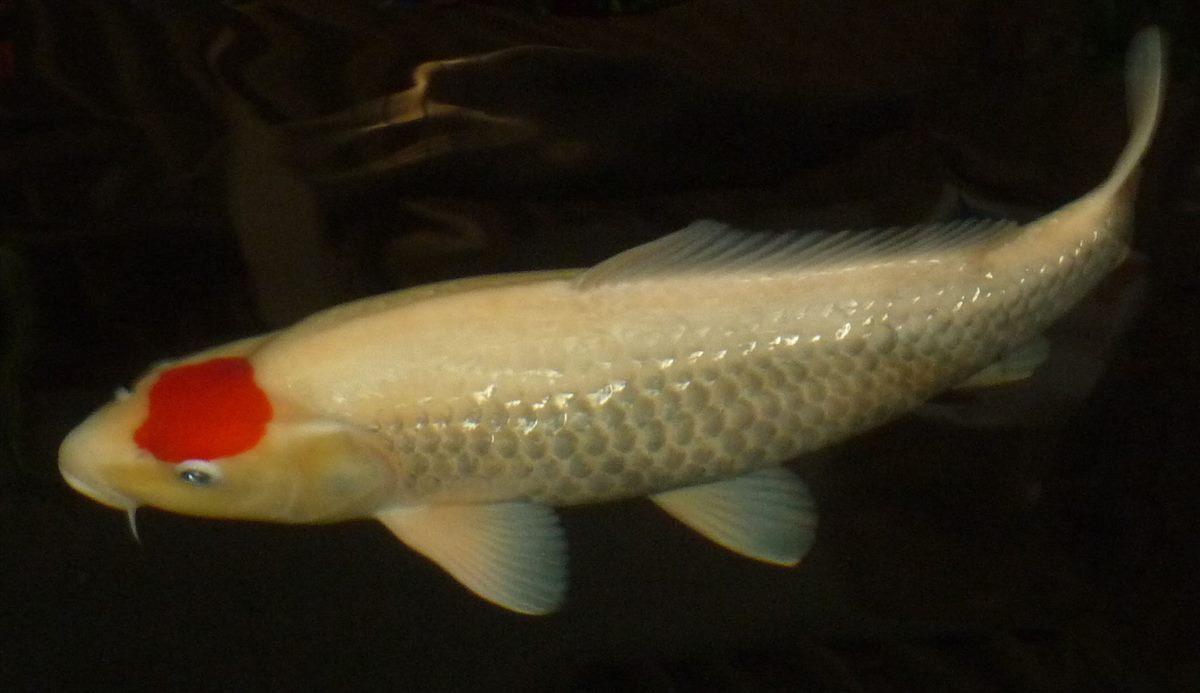

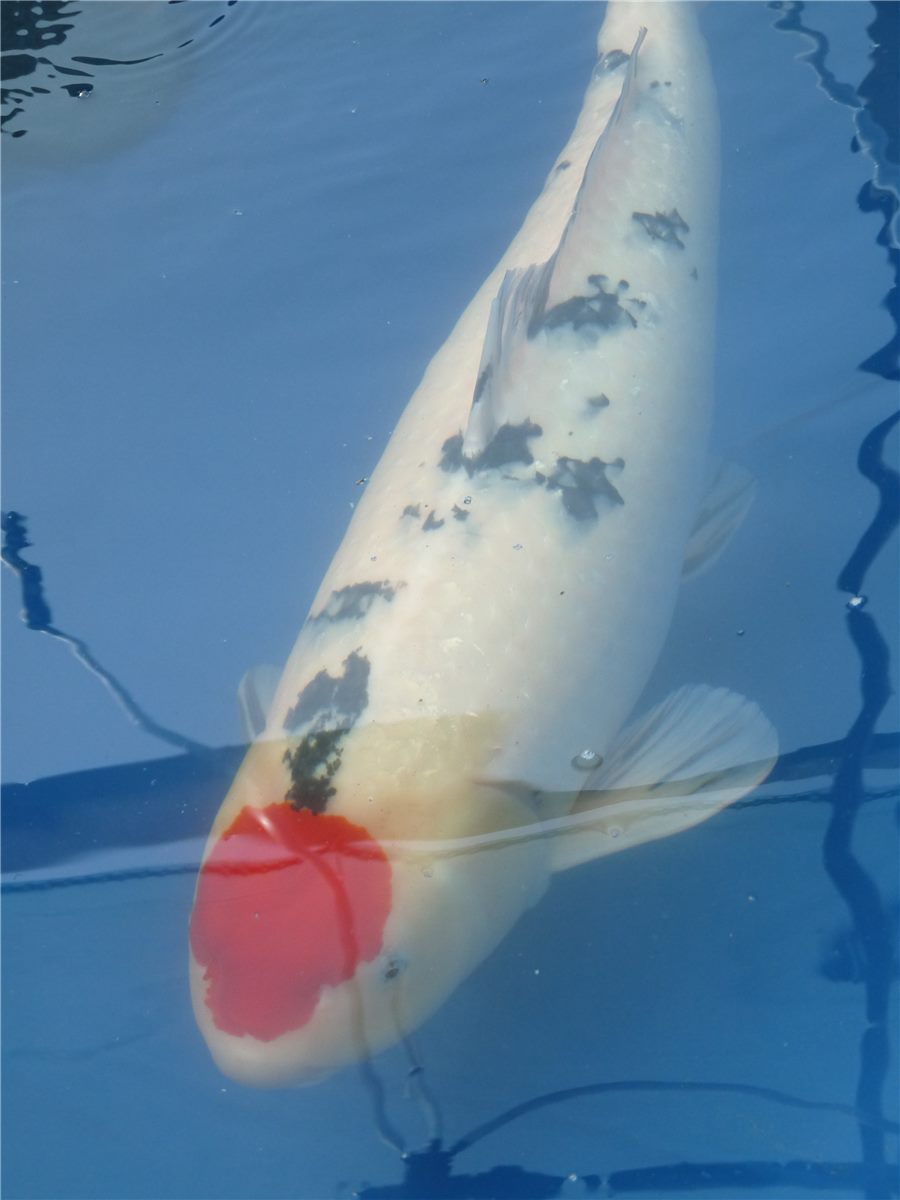

| Variety | What to look for |
|---|---|
| Tancho Kohaku | White body with a red head patch. |
| Tancho Sanke | A red head patch and Sanke-style black spots (sumi) on the white body. |
| Tancho Showa | A red head patch with the broader, often wrapping black pattern typical of Showa. Black can also appear on the head. |
Tancho Kohaku or Maruten Kohaku?
Look down the back of the fish. A Kohaku with a separate round red head mark and more red patches on the body is Maruten Kohaku. Sumi on Tancho Sanke or Tancho Showa is part of its black pattern, so use the presence of more red when making this comparison.
Other Tancho combinations
- Tancho Goshiki and Tancho Kujaku
- Look for Goshiki’s net-like pattern or Kujaku’s metallic sheen and dark scale pattern.
- Doitsu Tancho Showa and Doitsu Tancho Kujaku
- Doitsu describes the reduced scale coverage.
- Gin Rin Tancho Kohaku and Gin Rin Tancho Showa
- Gin Rin describes the sparkle on the scales.
- Tancho Ochiba and Tancho Budo Goromo
- The base variety still shows through, and the head mark may differ in color from classic Tancho Kohaku.
- Tancho Kin Showa and Tancho Sakura Ogon
- Both retain the metallic sheen of the base variety.
What to look for when choosing Tancho
View the fish from above. Check the placement and outline of the head mark, then look at the body line, skin quality and how the fish swims. If you plan to enter a show, check that event’s class list and entry rules.